Corporate Groups
Clearer decisions across the entire group
The Problem
Lots of Data, Not Enough Visibility
As corporate groups grow, the amount of information required to run the business grows with them.
Retail and distribution groups in particular can be managing thousands of products, large customer bases, supplier relationships, contracts, inventory across multiple locations, sales teams and several different companies or business units.
The information usually exists. The problem is that it does not always exist in a form that helps people make decisions.
Sales may sit in one system, inventory in another, contracts somewhere else, and financial results inside the accounting or ERP platform. Different companies within the group may even use different systems or structure their data differently.
That makes seemingly straightforward questions surprisingly difficult to answer.
Which products are performing well? Where is stock being tied up? Which customers or contracts are most profitable? Which locations need attention? Where should additional people, inventory or capital be allocated? And which parts of the group are actually producing the strongest return?
When those answers require several spreadsheets, manually assembled reports or knowledge held by a handful of people, decisions inevitably become slower.
For businesses operating at scale, that matters. Resources are limited, and management needs to be able to quickly understand where those resources will have the greatest impact.
Our Solution
One View Across the Group
Our solution is to build custom operational and financial reporting systems around the way the corporate group actually operates.
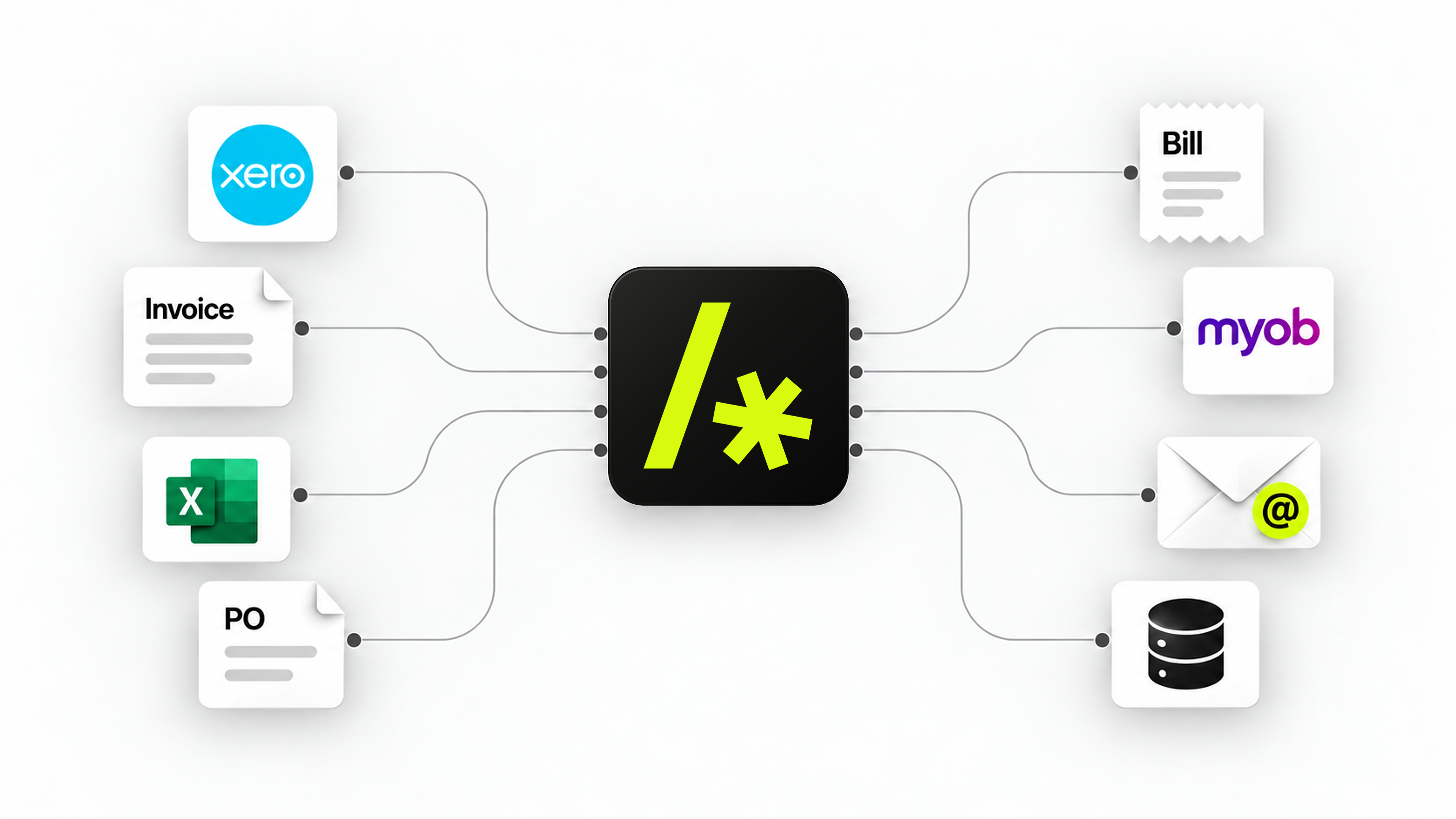
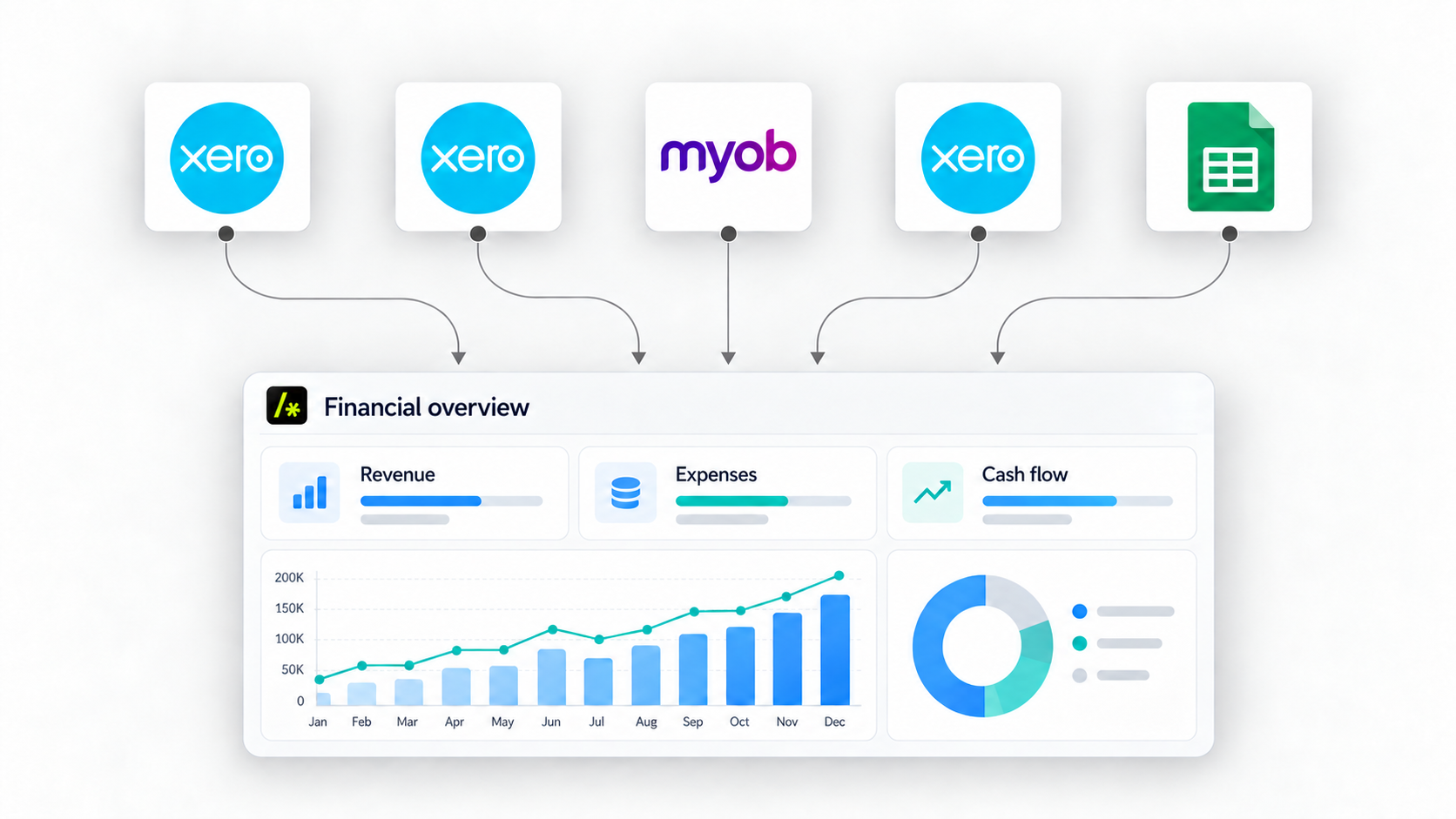
We bring together information from the systems already running the business - including sales, inventory, customers, contracts, purchasing, accounting and other operational platforms - and structure that information into one consistent view.
Instead of simply producing another set of static reports, we build systems that allow management to move between different levels of the organisation.
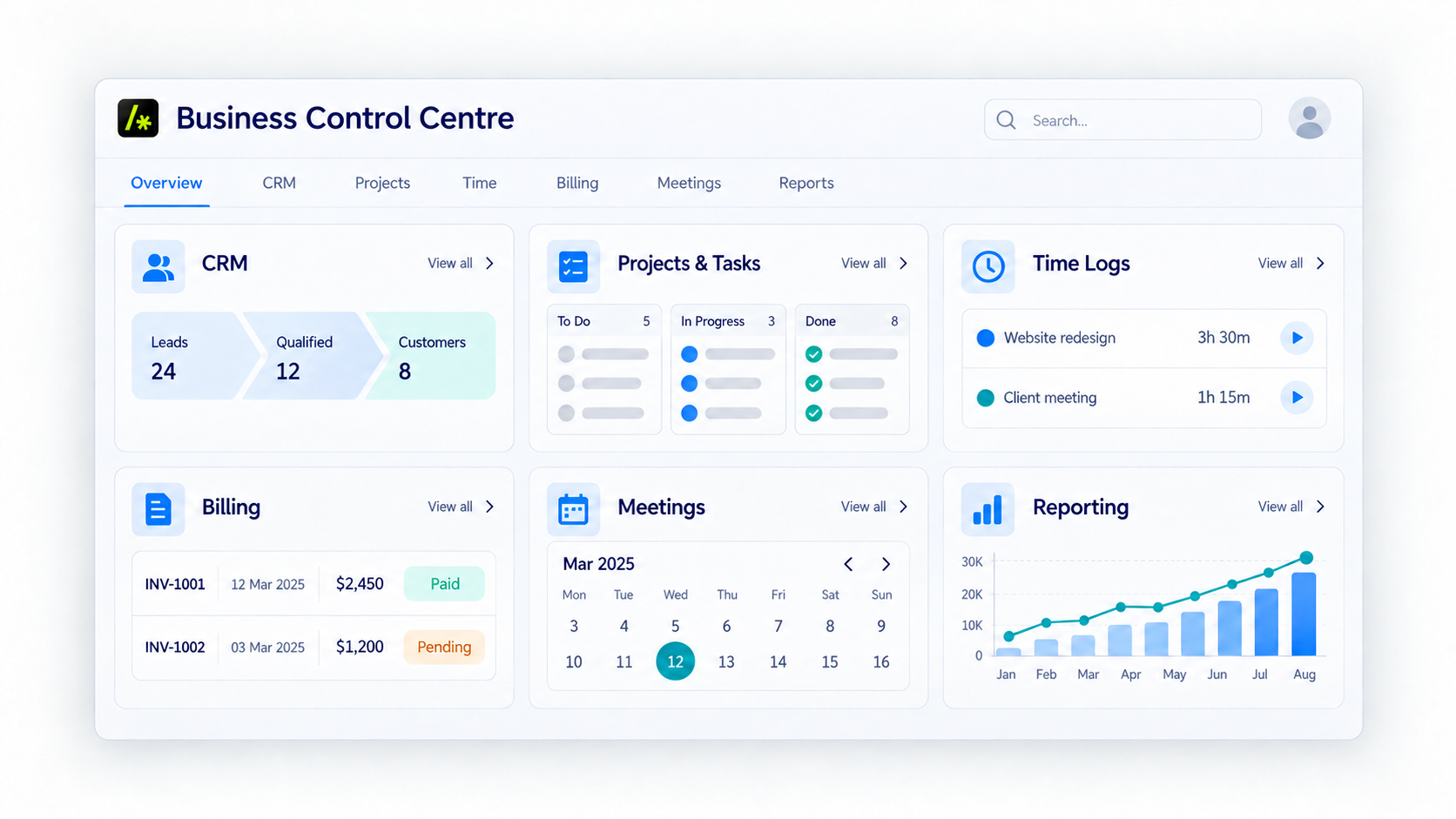
That might mean starting with performance across the entire corporate group, drilling into an individual company or business unit, then looking further into a location, customer, supplier, product category or individual SKU.
Financial information can sit alongside operational information, making it possible to understand not just what is happening, but what it means commercially.
For example, management can see where inventory is running low or sitting idle, which customers and product categories are driving revenue, where margins are changing, how contracts are performing, and where working capital or operational resources may need to be redirected.
Because these systems are custom-built, the reporting is based around the actual questions the business needs to answer rather than the limitations of a generic reporting package.
The result is a much clearer picture of how the organisation is performing and a stronger foundation for deciding where to allocate people, stock, capital and management attention to get the greatest return.
How We Work
Step 1: Audit & Structural Discovery
We start by understanding how the corporate group is structured and how the business currently makes decisions.
That means looking at the companies, business units and locations within the group, along with the systems used to manage sales, inventory, customers, contracts, purchasing and financial information.
We also work through the reports currently being produced, the decisions management is trying to make from them, and where people are spending time manually collecting or reconciling information.
This is important because reporting should not begin with a dashboard. It should begin with understanding what the business actually needs to know.
From there, we map the data, reporting structure and integrations required to create a consistent view across the group.
Step 2: Custom Architecture & Automation Build
Once the structure is understood, we build the reporting and data platform around the organisation.
That can involve connecting ERP, accounting, CRM, inventory, sales and contract systems, creating a central data model, automating data processing and building the reporting interfaces management will use day to day.
We structure the system so information can be viewed at the level that makes sense for each decision - from the entire corporate group down to individual companies, locations, customers, products or transactions.
We also build the business-specific calculations and measures required to turn raw operational data into useful information, rather than relying solely on whatever reporting is available out of the box from each source system.
Throughout the build, we work with real business data and real management questions so the finished system reflects how the organisation actually operates.
Step 3: Deployment, Validation & Handover
Before deployment, we validate the information against the organisation's existing operational and financial records.
That includes making sure sales, inventory, customer, contract and financial figures reconcile correctly and that information rolls up consistently across companies and business units.
We then work with the people who will actually use the system to make sure the reporting is clear, useful and suited to the decisions they need to make.
Once everything is ready, we deploy the system, help the team transition onto it, and provide the documentation and handover required for ongoing use.
The end result is a purpose-built view of the corporate group that gives management the information they need to make faster, better-informed decisions about where to focus the organisation's resources.