Charities
Reducing administration, lowering costs and giving charities a clearer view of their operations
The Problem
Purpose-Driven Organisations, Complex Operations
Charities often have to manage much of the same operational complexity as commercial organisations, but with tighter budgets and a much stronger need to make every dollar count.
They may be managing donations, recurring payments, projects, grants, supporters, volunteers, staff, communications, accounting, reporting and fundraising campaigns, often across a collection of different platforms.
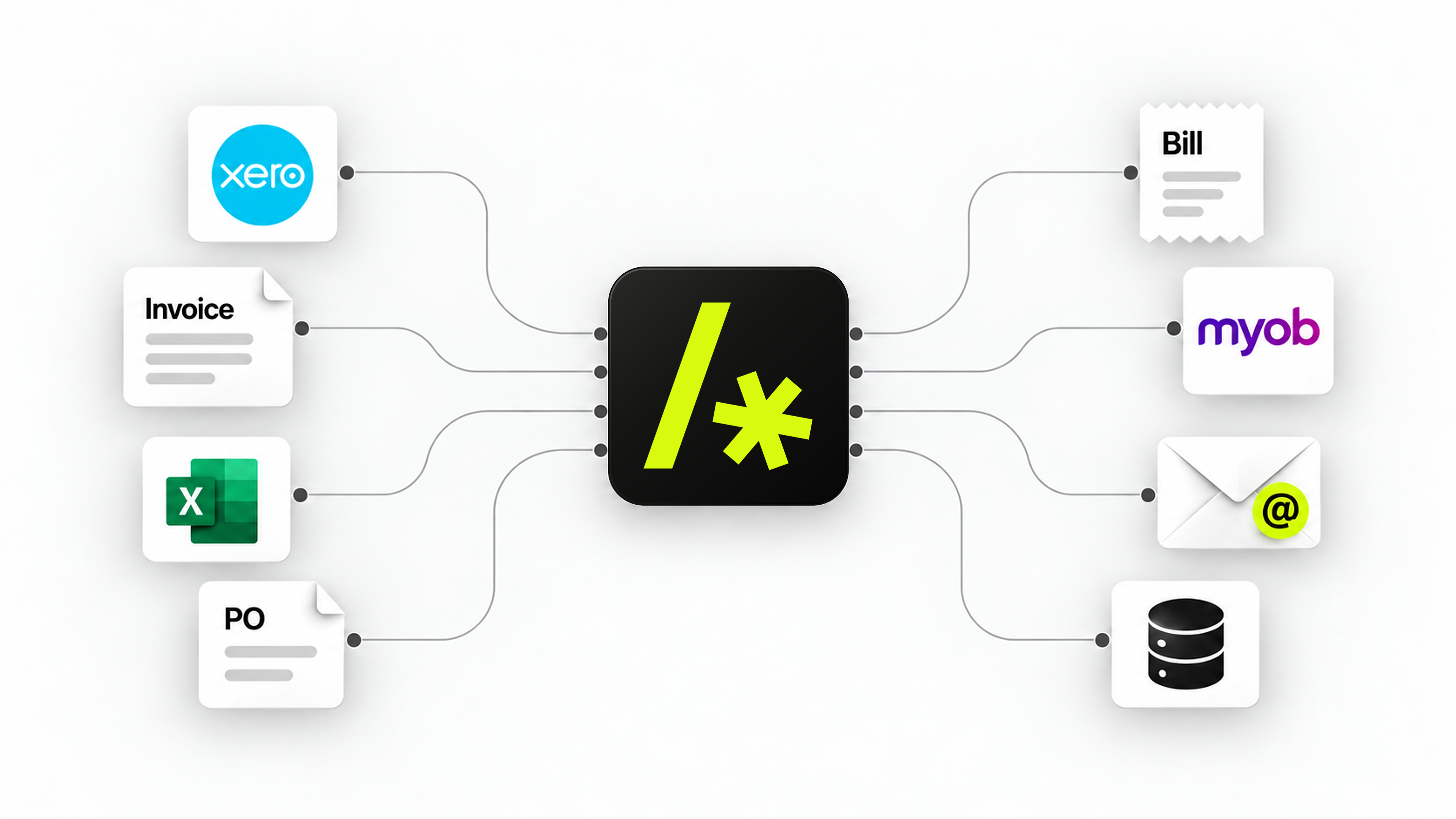
A payment platform might handle donations, Mailchimp manages communications, Xero handles accounting, project information sits in spreadsheets, and supporter data lives somewhere else again.
Each system may work well on its own, but the administration starts to build when information needs to move between them.
Staff end up reconciling payments, allocating donations to projects, updating spreadsheets, maintaining supporter records and manually transferring information between systems.
For charities, that inefficiency has a very real cost. Time spent maintaining disconnected systems is time that cannot be spent delivering programs, supporting communities or growing the organisation's impact.
Our Solution
Systems Built Around How Charities Actually Work
We build custom systems that bring the important operational parts of a charity together and automate the processes that normally require manual work.
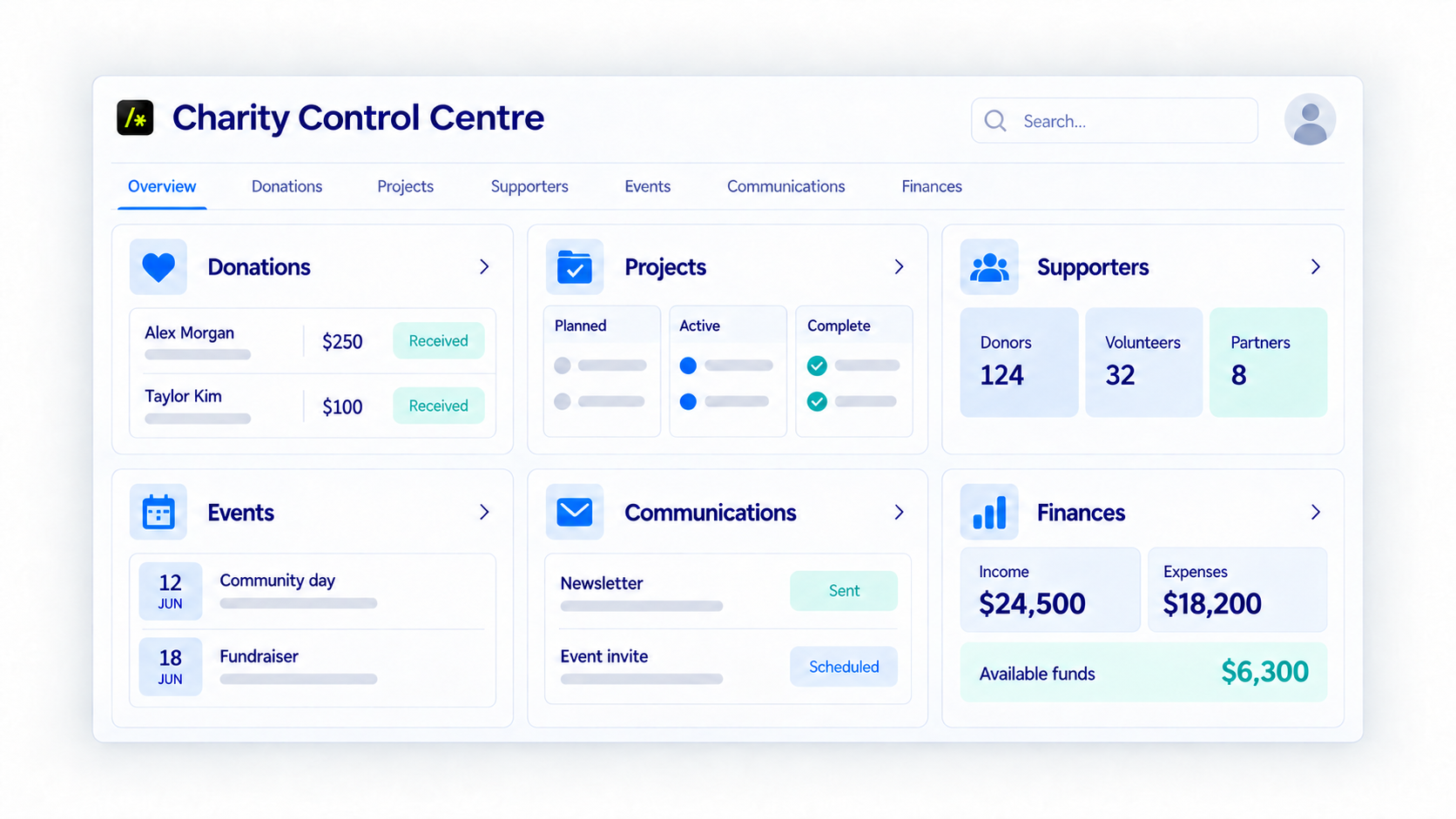
That can include donation and payment processing, project and fund allocation, supporter management, accounting integrations, communications, internal workflows and reporting.
Additionally, another area where we can generate savings for a charity is within the payment processing area.
Many charities rely on fundraising and donation platforms that charge additional platform fees on top of large underlying payment processing fees. Where appropriate, we can build more optimised payment integrations that allow donations to flow into the charity's own systems without relying on overly expensive intermediary platforms.
For organisations processing significant donation volumes, even relatively small reductions in transaction fees can result in meaningful savings over time.
We can also connect incoming donations directly to projects, campaigns or funds, reducing the amount of manual reconciliation required and giving the organisation a clearer view of where money has come from and where it is intended to go.
On top of that, we build operational and financial reporting that brings information from across the charity into one place. Management can see donation performance, project funding, expenditure, supporter activity and other key information without needing to manually assemble it from multiple systems.
Because every charity operates differently, these are not off-the-shelf products. We build around the organisation's existing processes, systems and requirements, connecting what already works and replacing only the areas that are creating unnecessary cost or administration.
The end result is a simpler operational environment, better visibility across the organisation and more of the charity's resources available for the work it exists to do.
How We Work
Step 1: Audit & Structural Discovery
We begin by understanding how the organisation currently operates.
That includes looking at how donations and other payments are received, how funds are allocated, how accounting is handled, how supporters are managed, which systems are already in use and where staff are performing repetitive manual work.
We also look closely at the cost of the current setup, including payment and platform fees, to identify areas where custom integration or automation may deliver a direct financial benefit.
From there, we map which systems should remain, which should be connected and which processes would benefit from being rebuilt.
Step 2: Custom Architecture & Automation Build
Once the structure is understood, we design and build the system around the charity's actual requirements.
That can involve building donation and payment workflows, integrating directly with payment providers, automating accounting entries, allocating funds against projects or campaigns, managing supporter information and creating operational reporting.
We connect with the platforms the charity already relies on where it makes sense, rather than replacing systems unnecessarily.
Throughout the build, we work with real organisational data and real-world scenarios so the system handles the way the charity actually operates, including the exceptions and edge cases that generic software often struggles with.
Step 3: Deployment, Validation & Handover
Before deployment, we test the system against the charity's existing processes and make sure payments, allocations, integrations, reporting and automations are working correctly.
We then deploy the system into the organisation's environment, help staff transition onto the new workflows and provide the documentation and handover required for ongoing use.
The goal is to leave the organisation with systems that are easier to operate, less expensive to maintain and able to evolve alongside the charity as its programs, supporters and requirements grow.